MemoHive Official Website › Blog › MemoHive Ingredients List: 5 Rows Read One By One
MemoHive notebookMemoHive Ingredients List: 5 Rows Read One By One
Five rows, five amounts, one line of other ingredients. This is the whole of the label, read slowly, one row at a time.
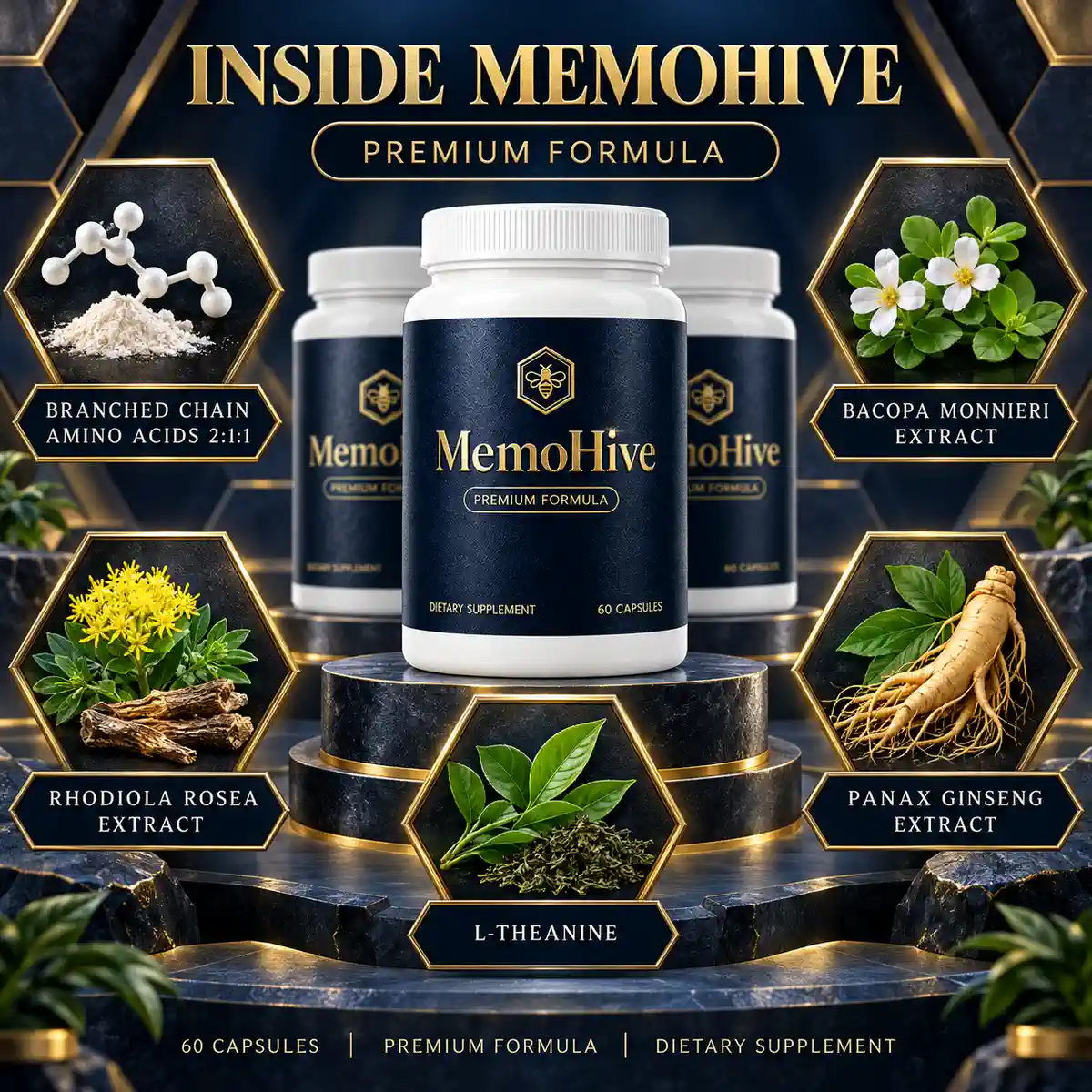
MemoHive prints five actives per two-capsule serving: branched chain amino acids 540 mg, bacopa monnieri extract 200 mg, rhodiola rosea extract 100 mg, L-theanine 100 mg and panax ginseng extract 90 mg, a total of 1,030 mg. There is no blend, no caffeine and no gelatin.
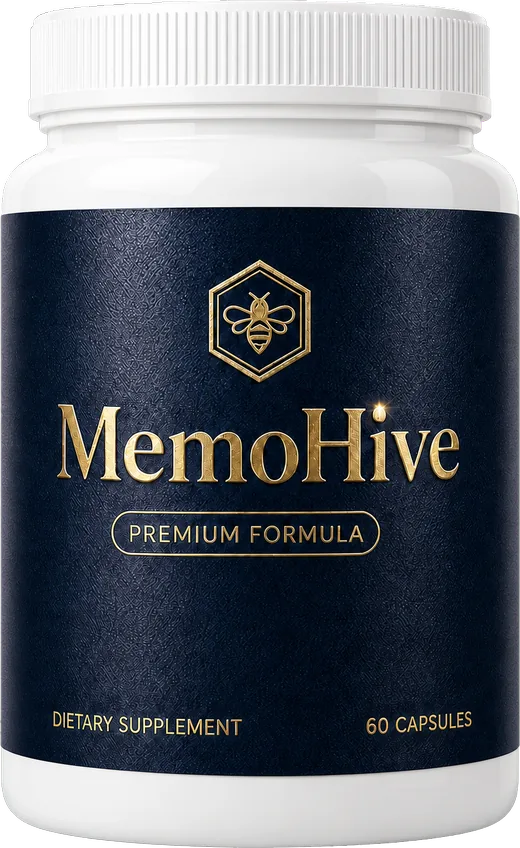
The whole label is printed
Five amounts, a total and an allergen line all sit on the label, and the order page carries the live price.
See today’s price and guaranteeDisclosure: Memohivedaily earns money on orders placed through this website. The checkout shows the live price before any card details are asked for.
- Five named actives, each with a printed milligram amount, totalling 1,030 mg per serving.
- Serving Size 2 capsules; Servings Per Container 30; 60 capsules a bottle.
- Only rhodiola carries a standardisation figure: 3% salidroside.
- Also in the capsule: microcrystalline cellulose, the hydroxypropyl methylcellulose shell and magnesium stearate.
- Allergen line: Contains No Allergens. Caffeine is not on the panel.
- None of the five rows has a Daily Value.
Row 1: What are the branched chain amino acids, and how much?
The first row is branched chain amino acids in a 2:1:1 ratio, which means leucine, isoleucine and valine. The label prints 540 mg per serving, more than half of the 1,030 mg total. Split by that ratio, the 540 mg is about 270 mg of leucine, with 135 mg each of isoleucine and valine.
The published work uses very different quantities. Short muscle and strength studies ran on 10 to 14 g daily. The NIH Office of Dietary Supplements describes up to 20 g a day as the amount that appears safe. The one systematic review of these amino acids and cognitive function found eight studies in total, and five showed no change. The label amount is in milligrams and the studies are in grams, so the two should not be joined by a claim.
Row 2: What is the bacopa monnieri extract?
Bacopa follows at 200 mg per serving. It is the best-researched row on the panel. The trials in the two systematic reviews used 300 to 450 mg a day of a standardised extract, and every trial ran for twelve weeks.
The label prints 200 mg and gives no standardisation figure for it, so the bottle sits below the researched range and without a stated marker. The sensible takeaway is not that it fails. It is that you know exactly where the bottle stands against the trials, which is more than most labels let you work out. Reported effects in the trials were digestive.
Row 3: What is the rhodiola rosea extract?
Rhodiola is printed at 100 mg and carries the only standardisation figure on the panel: 3% salidroside. That means about 3% of the extract's weight is the marker, so 100 mg of extract carries roughly 3 mg of it. The figure tells you the strength of one compound, and nothing about memory.
Only two trials print a dose in their abstracts: 400 mg daily for twelve weeks, and 576 mg daily for 28 days. Both measured fatigue and stress, not memory. Reported effects include dizziness, headache, insomnia and either dry mouth or excess saliva, and rhodiola is one of the two rows with recorded medicine interactions.
Row 4: What is L-theanine, and how much is in a serving?
L-theanine is an amino acid found in green tea. The label prints 100 mg. In one dose-response study, 100 mg was tested head to head against 200 mg and 400 mg, and at 100 mg simple reaction time improved. The reviews on stress and anxiety use 200 to 400 mg a day. Many of the sharper attention findings come from studies that gave caffeine alongside it, and MemoHive has no caffeine.
So the bottle sits at the amount the dose study tested, and below the stress reviews. Each fact is about a different study. None of them is a promise about this capsule.
Row 5: What is the panax ginseng extract?
Ginseng is last, at 90 mg. The Cochrane review of ginseng and cognition could not combine its trials, since doses and lengths all differed, and it reported no convincing sign of a cognitive effect in healthy people. Asian ginseng may lower blood sugar, may interfere with blood clotting and may worsen autoimmune disorders, and it is reported to reduce the anticoagulant effect of warfarin.
No standardisation figure is printed for this row. If you take any medicine, this is the row to show your doctor first.
What else is in the capsule?
Underneath the five rows the label prints the other ingredients: microcrystalline cellulose, hydroxypropyl methylcellulose (capsule) and magnesium stearate. The capsule shell is the middle entry, a plant-derived cellulose and not gelatin. Under that line the label prints Contains No Allergens.
| Item | Printed on the label |
|---|---|
| Serving size | 2 capsules |
| Servings per container | 30 |
| Branched chain amino acids 2:1:1 | 540 mg |
| Bacopa monnieri extract | 200 mg |
| Rhodiola rosea extract (3% salidroside) | 100 mg |
| L-theanine | 100 mg |
| Panax ginseng extract | 90 mg |
| Total named actives | 1,030 mg |
| Other ingredients | Microcrystalline cellulose; hydroxypropyl methylcellulose (capsule); magnesium stearate |
| Allergens | Contains No Allergens |
Is MemoHive a nootropic, and is it a capsule or gummy?
The sales page calls it a memory and mental clarity formula. Whether you file that under nootropic or cognitive support is your word choice. The form is not in doubt: MemoHive is a capsule. Gummies, powders and liquid drops are different products. Searches often say pills, but the label says capsule, and it is the label that counts. The panel is the best guide to what it contains, and we have printed it above.
How do you compare this label with another bottle?
Use the same five questions on any supplement. Is every ingredient named? Is there an amount against every name, or only a blend total? Does each extract state a standardisation marker? Are the serving size and the servings per container both printed? Is the shell material named, with an allergen line? A bottle that answers all five lets you compare it with other products on facts. A bottle that answers two leaves you doing guesswork.
MemoHive answers four of the five fully and the standardisation question partly, because only rhodiola carries a marker. That is a fair score, and it is better to see it written plainly than to have it hidden.
Which row matters most if you take medicines?
Start with ginseng and rhodiola, the two rows with recorded interactions. Take the bottle to your doctor or pharmacist. Because every amount is printed, they can check the list in a minute.
Frequently asked questions
What is in MemoHive?
Five actives per two-capsule serving: 540 mg of branched chain amino acids, 200 mg of bacopa monnieri extract, 100 mg of rhodiola rosea extract, 100 mg of L-theanine and 90 mg of panax ginseng extract, 1,030 mg in all.
Is there a proprietary blend in MemoHive?
No. Every one of the five actives has its own printed amount, so nothing is pooled under a blend total.
Does MemoHive contain caffeine?
No. No stimulant appears on the panel or in the other-ingredients line.
What are the other ingredients?
Microcrystalline cellulose, hydroxypropyl methylcellulose (the capsule shell) and magnesium stearate. The allergen line reads Contains No Allergens.
Is MemoHive a gummy, a drop or a capsule?
A capsule, not a gummy, powder or liquid drops.
Which ingredient has the most research?
Bacopa is the best-researched row on the panel, and the trials in the two systematic reviews all ran for twelve weeks. None of the research studied the finished MemoHive capsule.
Sources
- Majid H, Islam SU, Kohli S, Nidhi. Efficacy of branched chain amino acid administration on cognitive function: a systematic review. Nutr Neurosci. 2026;29(5):579-594. PMID 41194744. https://pubmed.ncbi.nlm.nih.gov/41194744/
- NIH Office of Dietary Supplements. Dietary Supplements for Exercise and Athletic Performance: Fact Sheet for Health Professionals. Updated 1 April 2024. https://ods.od.nih.gov/factsheets/ExerciseAndAthleticPerformance-HealthProfessional/
- Pase MP, Kean J, Sarris J, Neale C, Scholey AB, Stough C. The cognitive-enhancing effects of Bacopa monnieri: a systematic review of randomized, controlled human clinical trials. J Altern Complement Med. 2012;18(7):647-52. PMID 22747190. https://pubmed.ncbi.nlm.nih.gov/22747190/
- Kongkeaw C, Dilokthornsakul P, Thanarangsarit P, Limpeanchob N, Norman Scholfield C. Meta-analysis of randomized controlled trials on cognitive effects of Bacopa monnieri extract. J Ethnopharmacol. 2014;151(1):528-35. PMID 24252493. https://pubmed.ncbi.nlm.nih.gov/24252493/
- Hung SK, Perry R, Ernst E. The effectiveness and efficacy of Rhodiola rosea L.: a systematic review of randomized clinical trials. Phytomedicine. 2011;18(4):235-44. PMID 21036578. https://pubmed.ncbi.nlm.nih.gov/21036578/
- Ishaque S, Shamseer L, Bukutu C, Vohra S. Rhodiola rosea for physical and mental fatigue: a systematic review. BMC Complement Altern Med. 2012;12:70. PMID 22643043. https://pubmed.ncbi.nlm.nih.gov/22643043/
- National Center for Complementary and Integrative Health, National Institutes of Health. Rhodiola. Last updated April 2025. https://www.nccih.nih.gov/health/rhodiola
- Dassanayake TL, Wijesundara D, Kahathuduwa CN, Weerasinghe VS. Dose-response effect of L-theanine on psychomotor speed, sustained attention, and inhibitory control: a double-blind, placebo-controlled, crossover study. Nutr Neurosci. 2023;26(11):1138-1146. PMID 36263942. https://pubmed.ncbi.nlm.nih.gov/36263942/
- Williams JL, Everett JM, D'Cunha NM, Sergi D, Georgousopoulou EN, Keegan RJ, McKune AJ, Mellor DD, Anstice N, Naumovski N. The Effects of Green Tea Amino Acid L-Theanine Consumption on the Ability to Manage Stress and Anxiety Levels: a Systematic Review. Plant Foods Hum Nutr. 2020;75(1):12-23. PMID 31758301. https://pubmed.ncbi.nlm.nih.gov/31758301/
- Camfield DA, Stough C, Farrimond J, Scholey AB. Acute effects of tea constituents L-theanine, caffeine, and epigallocatechin gallate on cognitive function and mood: a systematic review and meta-analysis. Nutr Rev. 2014;72(8):507-22. PMID 24946991. https://pubmed.ncbi.nlm.nih.gov/24946991/
- Geng J, Dong J, Ni H, Lee MS, Wu T, Jiang K, Wang G, Zhou AL, Malouf R. Ginseng for cognition. Cochrane Database Syst Rev. 2010;(12):CD007769. PMID 21154383. https://pubmed.ncbi.nlm.nih.gov/21154383/
- National Center for Complementary and Integrative Health, National Institutes of Health. Asian Ginseng: Usefulness and Safety. Last updated February 2025. https://www.nccih.nih.gov/health/asian-ginseng
- Izzo AA, Di Carlo G, Borrelli F, Ernst E. Cardiovascular pharmacotherapy and herbal medicines: the risk of drug interaction. Int J Cardiol. 2005;98(1):1-14. PMID 15676159. https://pubmed.ncbi.nlm.nih.gov/15676159/
- Electronic Code of Federal Regulations. 21 CFR 101.36 - Nutrition labeling of dietary supplements. https://www.ecfr.gov/current/title-21/chapter-I/subchapter-B/part-101/subpart-C/section-101.36
Our view
The best thing about this label is that you can read it. Five names, five amounts and a total that adds up. That lets anyone set the bottle beside the published work and see where it matches and where it does not. In several rows it does not match, and we have said so instead of hiding it.
What we cannot tell you is how the five ingredients behave together in the finished capsule, because that has not been studied. Treat the list as a clear description of what is inside, not as a promise about what happens next. If you take medicines, show the list to a doctor before the first capsule.
Read the panel on the bottle
When your bottle arrives, compare the panel with the table above before the first capsule.
See today’s price and guaranteeDisclosure: Memohivedaily earns money on orders placed through this website. The checkout shows the live price before any card details are asked for.
Last updated October 29, 2026. Published . Next review date is set when a figure on the label or the order page changes.
MemoHive is a dietary supplement for healthy adults aged 18 and over, sold to support memory and mental clarity. It is not FDA approved, no supplement is, and it is not a treatment for any condition. For a medical question, ask your doctor or pharmacist.