MemoHive Official Website › Blog › What To Write Down During A Supplement Trial, And What To Leave Out
MemoHive notebookWhat To Write Down During A Supplement Trial, And What To Leave Out
Four lines a day, started before the first capsule. Any more than that and it stops happening by week two; any less and there is nothing to read back when the money question arrives.
The first entry belongs before the first capsule
A trial with no baseline has nothing to compare. Three weeks in, “I think it is a bit better” is a memory of a feeling rather than a record of one, and memory is the thing under test.
Take three or four days of readings before you start. One day is not enough, because a single day before the capsules is exactly as noisy as a single day after them, and you will have picked whichever day you happened to feel like beginning on.
Record at baseline precisely what you will record later. Same lines, same order, same time of day. A field you add in week four is a field with no baseline, and it will quietly become the one you believe.
If the bottle has not arrived yet, this is the useful thing to do with the waiting period. The seller publishes a maximum delivery time of thirty days, and a few of those days spent writing four lines a night costs nothing at all.

Four lines a day, and why each one
Four. More than four and it stops happening by week two, which is worse than not starting, because a log with a hole in it invites you to fill the hole from memory.
| The line | A usable entry |
|---|---|
| Whether you took it, and when | “Yes, 7:40am, before breakfast.” A blank day is an entry too, and the most important one |
| Hours slept the night before | “6.5”. One number, no commentary |
| One fixed everyday task, scored roughly | “Ran the Tuesday meeting without notes: 3 out of 5” |
| Anything that felt wrong | “Headache from 2pm”, or nothing at all |
The third line is the one that does the work, and it has to be chosen before you start. Pick something you genuinely do most days and can score out of five without thinking hard about it: names at the school gate, following a long email without rereading it, where you put your keys, holding a shopping list in your head. A task invented on day forty is a task with no baseline.
The second line is there because sleep moves the third line more than anything else will. If you do not record it you will attribute a bad Thursday to the capsules and a good Friday to the capsules, and both will have been about the night before.
The fourth line is a safety record as much as a data one, and the reported effects on this panel are specific enough to be worth naming. The StatPearls monograph on bacopa lists increased stool frequency, nausea and abdominal cramps as the most common, and they are the effects the trials themselves recorded. NCCIH lists dizziness, headache, insomnia and either dry mouth or excess saliva for rhodiola. NCCIH again names insomnia as the most common effect reported for panax ginseng. Written down with a date beside them those are information; recalled vaguely six weeks later they are an impression.
What not to write down
Everything else. That is not a joke about brevity, it is the design: a notebook with fourteen fields is a notebook you abandon in week two, and an abandoned notebook is worse than none because you will remember having kept one.
Three things in particular are worth leaving out.
Anything you cannot score the same way twice. “Felt sharper” is not comparable across weeks, because the scale lives in your head and moves with your mood. A rough number against a fixed task is comparable, even when the number is crude.
Your expectation. Writing “week three, should be kicking in about now” contaminates every entry after it, including the ones you will later treat as evidence. Keep the wait figures out of the log and in the diary where they belong.
A second change, unlabelled. If you also started going to bed an hour earlier in week two, you now have two trials running at once and no way to separate them. Do not pretend it did not happen: write the change down as a dated event, and accept that the weeks either side of it are not comparable. Illness, a holiday, a new job and a course of anything else all go in the same place.
Ninety days is long enough to read back
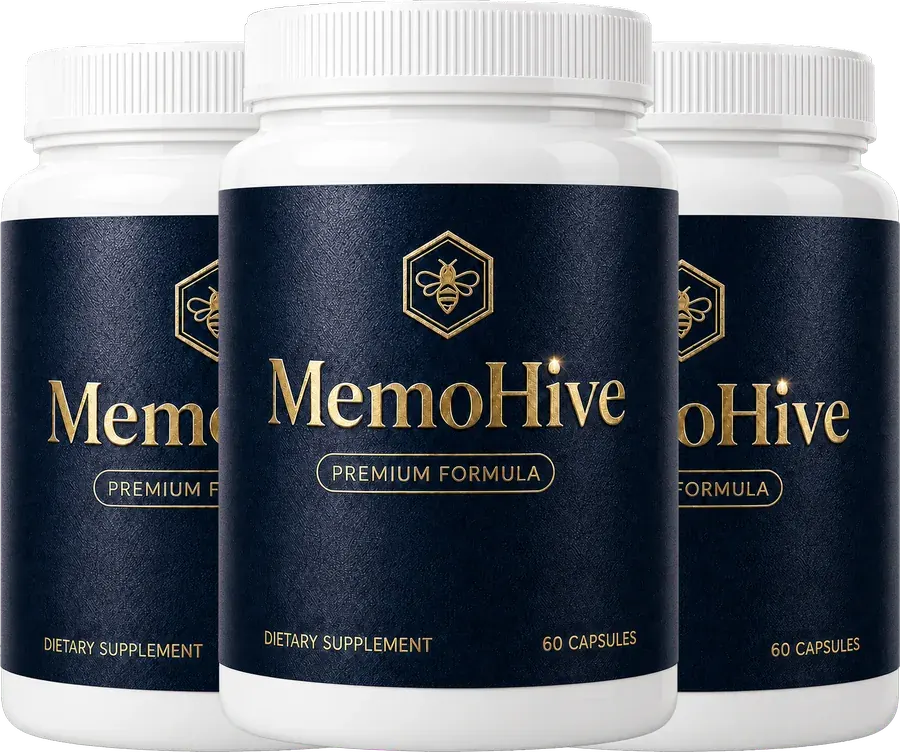
Three bottles is 180 capsules at two a day. It covers the sixty-day window and the twelve weeks the bacopa research dosed over, which are the two dates a notebook is read at.
Order MemoHiveWhy one good morning settles nothing
One good morning settles nothing, and one bad one settles nothing either. The spread between your own days is wider than any effect this category has demonstrated under controlled conditions, which is precisely why the trials are built the way they are.
The systematic review found bacopa improved performance on 9 of 17 tests in the domain of memory free recall across six twelve-week trials, with little evidence of change in any other domain. A review that can say which nine of seventeen moved is a review that ran the tests under supervision and pooled hundreds of people. A person reading a notebook at the kitchen table has one participant, no supervision and no comparison group.
So compare weeks, never days. Add the third line across seven days, compare that total with the same total from the baseline week, and ignore any single entry that looks remarkable in either direction. It is crude, and it is the best a single person can do without fooling themselves.
Your trial has no control arm
It is worth knowing exactly what that costs, because the published record contains the same shape and is honest about it.
Kasper 2017 gave 400 milligrams a day of a rhodiola extract to 118 outpatients for twelve weeks. It was open-label and single-arm, with no placebo group, so what it can show is a course over time and what it cannot show is an effect over placebo. That is your notebook, described by a research team.
The sharper example is a 2025 randomised trial. It gave 300 milligrams a day of a bacopa extract for twelve weeks to 101 adults aged 40 to 70 who reported problems with memory and attention. On the objective measures, verbal learning, attention and working memory, there was no difference between the bacopa group and the placebo group. What did improve was self-reported stress reactivity and fatigue.
Read that twice, because it is the most useful sentence in this article. The instrument that moved was the self-report. The instrument that did not move was the test. Your notebook is the first of those two.
Which leaves a clean division of labour. A notebook can tell you whether you want to keep buying it, and that is a real question with real money attached. It cannot tell you that the capsule caused what you wrote down. The wider literature is no more comfortable: a systematic review of supplement ingredients for cognitive performance in healthy adults concluded that the studies are inconsistent and imprecise, and that many of them are methodologically flawed.
Reading the notebook back, twice
Not nightly. Reading it every evening turns a record into a mood ring, and you will start writing entries that agree with yesterday.
Read it twice. The first reading is a week before the guarantee closes, which leaves time to post a parcel if that is the answer. The second is at twelve weeks, if you are still taking it, because that is the period the bacopa research dosed over and the first reading arrives well before it.
At the first reading the question is commercial and binary. Keep buying, or start a refund. Both are respectable answers and the seller’s wording puts no condition on the second one: 60 days from the date of purchase, no minimum period of use, no fee deducted. At the second reading the question is only whether to carry on, and by then you have twelve weeks of weeks to compare rather than an impression.
Expect the reading to be ambiguous, because most of them are. Two columns of rough numbers, a few blank days and a week off with a cold rarely produce a verdict that writes itself. No clear change is a result, and it is the most common one anybody running a trial of this size will get. It is not a failure of the notebook; it is what a single participant with no control group can honestly conclude.
When that is the reading, the decision comes down to something simpler and more respectable than evidence. The capsules are a cost per day, that cost is printed on the pricing page, and you either want to keep paying it for another month or you do not. Saying that out loud is better than inventing a finding to justify either answer.
One more thing worth doing at the second reading: write the review you would have found useful before you ordered. Date it by day number, say which pack you bought, and say what did not change as well as what did.
A notebook records what happened to one person. It is not evidence that a supplement caused anything, and it is not a substitute for medical advice. MemoHive is not a treatment for any condition, and a change in memory or thinking that worries you or the people around you is worth having assessed properly.
Sources
- Walker EA, Pellegrini MV. Bacopa monnieri. In: StatPearls. Treasure Island (FL): StatPearls Publishing. NCBI Bookshelf NBK589635, last updated 17 March 2023. https://www.ncbi.nlm.nih.gov/books/NBK589635/
- National Center for Complementary and Integrative Health, National Institutes of Health. Rhodiola. Last updated April 2025. https://www.nccih.nih.gov/health/rhodiola
- National Center for Complementary and Integrative Health, National Institutes of Health. Asian Ginseng: Usefulness and Safety. Last updated February 2025. https://www.nccih.nih.gov/health/asian-ginseng
- Pase MP, Kean J, Sarris J, Neale C, Scholey AB, Stough C. The cognitive-enhancing effects of Bacopa monnieri: a systematic review of randomized, controlled human clinical trials. J Altern Complement Med. 2012;18(7):647-52. PMID 22747190. https://pubmed.ncbi.nlm.nih.gov/22747190/
- Lopresti AL, Smith SJ. The Effects of a Bacopa monnieri Extract (Bacumen) on Cognition, Stress, and Fatigue in Healthy Adults: A Randomized, Double-Blind, Placebo-Controlled Trial. Clin Drug Investig. 2025;45(12):967-982. PMID 41091332. https://pubmed.ncbi.nlm.nih.gov/41091332/
- Kasper S, Dienel A. Multicenter, open-label, exploratory clinical trial with Rhodiola rosea extract in patients suffering from burnout symptoms. Neuropsychiatr Dis Treat. 2017;13:889-898. PMID 28367055. https://pubmed.ncbi.nlm.nih.gov/28367055/
- Crawford C, Boyd C, Deuster PA. Dietary Supplement Ingredients for Optimizing Cognitive Performance Among Healthy Adults: A Systematic Review. J Altern Complement Med. 2021;27(11):940-958. PMID 34370563. https://pubmed.ncbi.nlm.nih.gov/34370563/

Order MemoHive on the official website
Two capsules once daily, 60 capsules and 30 servings to a bottle, and 60 days from the date of purchase to change your mind.
$79 down to $49 a bottle · 60 days to change your mind
Order MemoHive On The Official WebsitePaid once at the checkout · 60-day money-back guarantee · lot MEM-26/ME-4847